
Goods and Parcel deliveries from a bygone age!
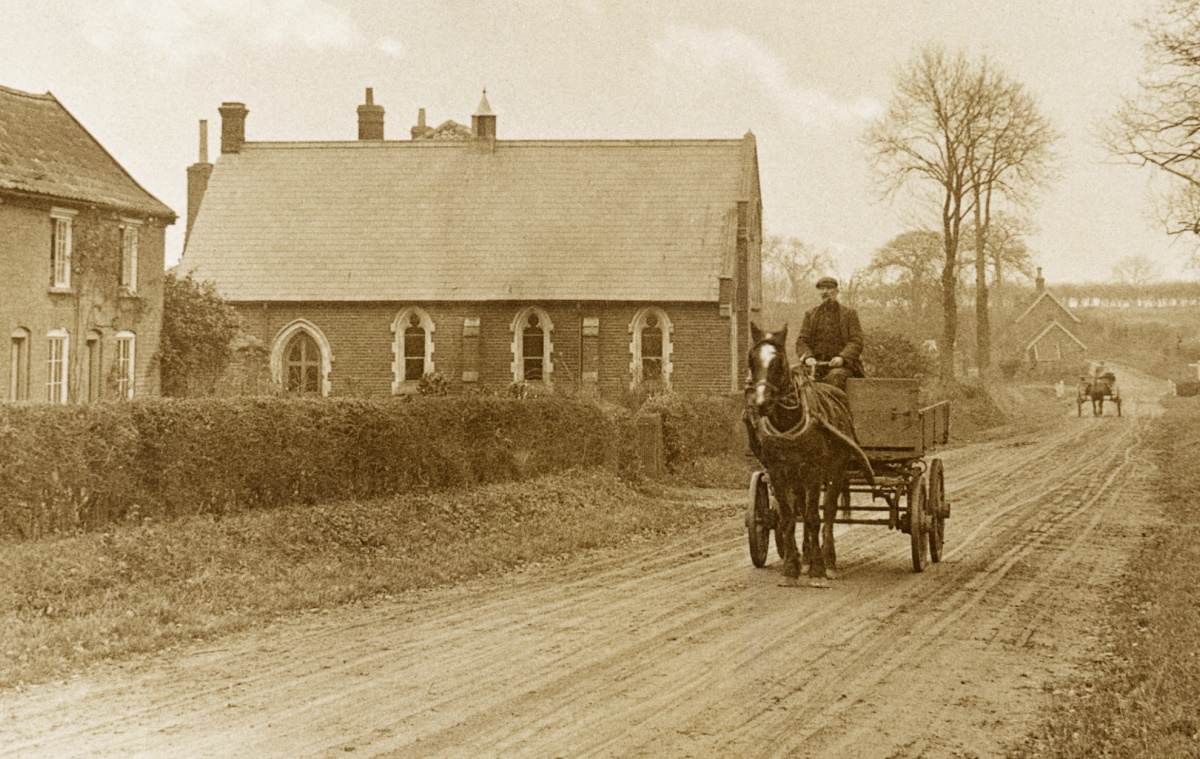
A Norwich Directory of 1783 tells us that Wreningham man, John Leman ran a twice weekly Carrier service moving goods / parcels in both directions between Wreningham and Norwich. It operated on Wednesdays and Saturdays with the Norwich destination of the Nag’s Head in St Stephens. The return journey to Wreningham then set out at 2pm. Perhaps the driver had enjoyed a break inside the Nag’s Head between the two halves of his trip? John Lemon’s Carrier service also called at Swardeston, Mulbarton, Bracon Ash and Hethel.
John Lemon (also spelt “Leman” and sometimes “Lammon”) 1727 – 1810, was a local landowner and probably of some means. Did he operate this carrier service, himself, or did he employ someone to do it for him?
John Lemon did not enjoy exclusivity. The same publication shows Norwich / Tacolneston carrier, Noah Nicolls, who called in at Wreningham during his own “carrier” round trips. He was also operating on Wednesdays and Saturdays: his return from the city (at the later time of 4pm) left from The Huntsman on Hog Hill.
We know from the Directories that all the carriers used Inns (also employed as their booking offices), at the Norwich-end of their journeys. This being the case, perhaps the many village collection / dropping off points were public houses? It’s hard to understand what alternative village calling points might have been – especially for carriers passing through a village to a further destination. NB Wreningham’s Bird in Hand is not believed to have opened until the 1790s – begging the question about Wreningham’s original collection / dropping off point. Might it have been John Lemon’s home? So, where would Noah Nicholls have stopped, in Wreningham, between 1783 and the early 1790s?
The 1830 Norfolk (Pigots) Directory does not specifically list Wreningham as a carrier destination or even a referenced stopping off point. However, business is business, and we might assume the Norwich / Ashwellthorpe, Norwich / Hapton and/or Norwich / Buckenham services would have called into Wreningham when passing.
The 1854 Norfolk (Whites) Directory doesn’t make specific reference to Wreningham, either. Nevertheless, there were return services running from Norwich to Ashwellthorpe (Saturdays), to Bunwell (Saturdays) and to Forncett (Wednesdays & Saturdays) – so Wreningham was probably well catered for.
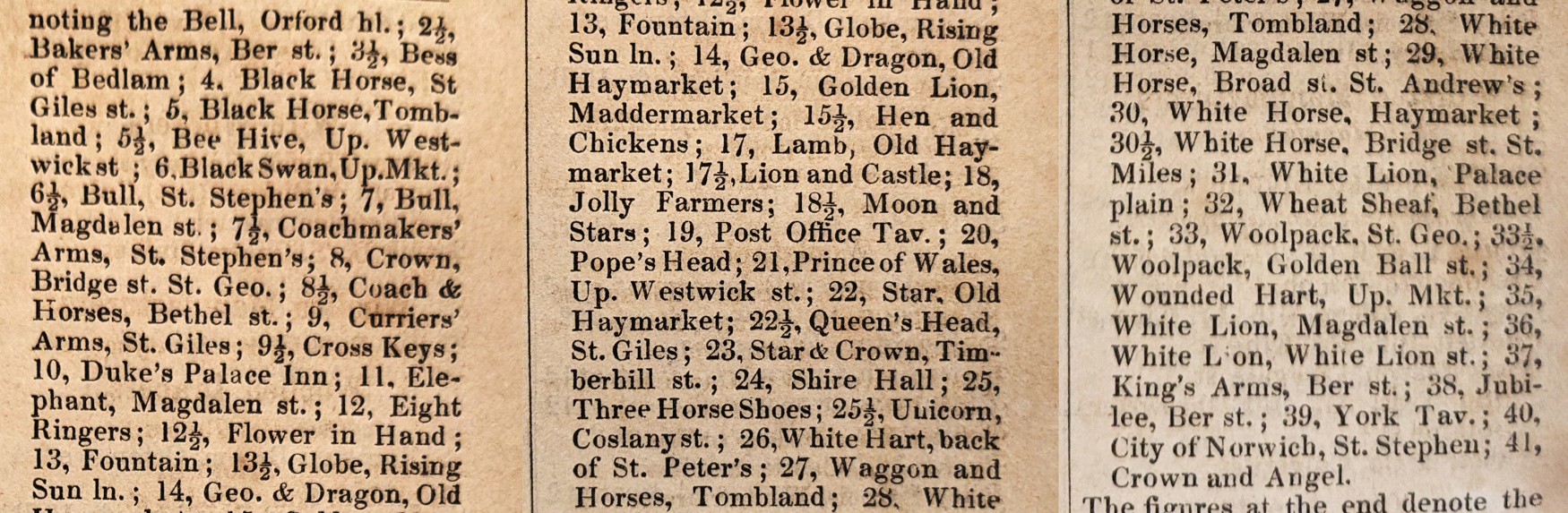
The 1854 Directory provides an interesting list of the many Norwich Inns – see above, which collectively hosted the very large number of Carrier services operating, radially from the city to the rest of Norfolk. On the 1854 Directory’s next double page, are details of their extensive county-wide destinations – including each Carrier’s name and the Inn it operated from (although we have not included that additional listing, here).
By 1883 the Directory was publishing more extensive details about small villages such as Wreningham. We are told that the Carriers (now) operating through Wreningham originated in “Tacolneston, Hopton [presumably: Hapton], Bunwell and New Buckenham. We are also informed that they (collectively) were providing Wreningham with services on Mondays, Wednesdays and Saturdays.
The 1892 Directory tells us that “Williams” provided our local service enroute between Norwich and Forncett St Peter on Mondays, Wednesdays & Saturdays. In addition, George Filby, based in New Buckenham, provided a Wednesday & Saturday service – as did James Breeze from Bunwell.
By 1904, carrier competition had further increased. The Bunwell / Norwich Wednesday & Saturday service was now in the hands of (relation?) Herbert Breeze – with John Olley having taken over the Wednesday & Saturday service from Hapton and “Knott” running a 3 day per week operation out of Forncett – including Mondays. “Vout”, presumably spotted a gap in the market and opened a Norwich service out of Hapton on Tuesdays and Fridays! (Excusing Sundays) that must have satisfied the people of Wreningham for every day of the week except Thursdays!
The 1912 Directory still described four operators:
“Smith” was now running the Forncett based service, John Olley was still working from New Buckenham and Herbert Breeze from Bunwell. All three were now on Wednesdays and Saturdays. Meanwhile, “Barnard”, in Hapton, had taken over the “Vout” run – and was still operating on Tuesdays and Fridays.
The 1925 Directory suggests, carrier services had returned to just Wednesdays and Saturdays. However, the 1929 Directory states that Wreningham’s (passing) services were “daily”.
It’s all very different to current times when we can be informed about detailed parcel deliveries (and right to our front doors, too) which can often be predicted in detail, days before the event – even being tracked in real time! However, it’s most unlikely today’s delivery drivers are relaxing at an Inn for an hour or two, halfway through their shift!